The Bunyip
Faërie in OZ: Aboriginal Dreaming Stories | Black Panther | Bunyip | Cook's Australian Fairy Tales | Ida Rentoul Outhwaite bibliography | Faërie in Australia | Peck's Australian Legends | Picnic at Hanging Rock - Faërie Realm | Picnic - Path of Light | Picnic - C3 & C18 | Disappearance @ Hanging Rock | Trees & nature spirits |

Contents
- True?
- Chronology
- Videos
- References
-----------------
1. True or false?
Bunyip / Bunjil / Yowee / Walanthagang.... Australian Aboriginal words for mythical and spiritual entities which are very real in life and story telling of that distinctive culture. The Bunyip, for example, is the mythical creature that lives in a body of water - swamp, billabong, creek, river, wetland - and can attack people. It is a being of horror and nightmares. But the question remains: Is the Bunyip real or not? The answer depends on how one defines the word real. Science would say that it must be physical. Believers would say that metaphysical is just as real as physical. People say they have seen them; stories of their existence go back thousands of years; specimens of skulls and bone have been discovered; there are no photographs, no actual live or dead specimens; people believe they are real. If they are real, then the reality they exist in is not necessarily available to enter into for each and every Australian. Young children can see, and interact with, fairies, whilst adults are oblivious to their presence. A so-called psychic person may see and have experiences beyond the realm of normalcy. In all these matters, the truth is elusive. Why? Because there is no general concensus, no "proof" one way or the other, no way to get everyone to agree. The present writer is a good example - open to the truth of scientific reality, but also to the reality of the metaphysical world - e.g., we can never prove love exists. Some of the names given this creature and related spirits over the years include the following:
- Bahnyip - 1812 [?].
- Manatee / Hippopotamus - Lake Bathurst 1818, 1821.
- Creature / Devil-Devil - Lake Bathurst 1832.
- Bunyip - Lake Timboon 1845. Word traced to the Wemba-Wemba or Wergaia language of the Aboriginal people of New South Wales and Victoria.
- Kinepratia / Kine Pratie / Kyonprate / Katimpia - Murrumbidgee Blacks / Watta Watta Blacks / Portland Blacks 1847.
- Tanatbah - Yabala Yabala Blacks 1847.
- Dengas / Dongas - Burrula Burrulia Tribe 1847.
- Mindai - Mallee Scrub, South Australia 1847.
- Murricola - Narran and Barwon Rivers 1852.
- Yohwee / Wahwee - Kamilroi dialect, Port Macquarie 1852, 1920.
- Wandong evil spirit - 1920
- Thilcooma fire spirit - 1920.
- Moorang - Moreton Bay 1920.
- Mooroop - Victoria 1920.
The chronology below lists the various elements of the real and unreal that surround the Bunyip. It contains newspaper and other accounts of encounters and beliefs. It also includes references to story books for children, to adult focussed books on cryptozoology which include the Bunyip, and to illustrations, both scientific and cartoonish. Enjoy the journey in discovering the Bunyip.
------------------
2. Chronology
1812
* The word Bahnyip is apparently contained in a pamphlet published by James Ives at the office of the Sydney Gazette, Sydney, in 1812. Therein it is described as "a large black animal like a seal, with a terrible voice which creates terror among the blacks". C.f. report under 30 July 1920. Unfortunately no original copy of this document has been located, it is only known from the 1920 reference, and has therefore not been verified. This reference seems highly improbable, especially as the word Bunyip has been attributed to an Aboriginal tribe from near the New South Wales and Victorian border. Pending verification, the original first official use of the term must remain 1845.
1818
* Explorer settler Hamilton Hume and surveyor James Meehan discover bones of a creature near Lake Bathurst. Their Aboriginal guides refer to it as a mythical creature called the Bunyip, though this statement has not been verified, or the original source located.
1821
* November 1821 - E.S. Hall of Lake Bathurst sees a creature in the water of Lake Bathurst South, located south of Goulburn and east of Lake George. See report of 27 March 1823.
* 19 December 1821 - The Philosophical Society of Australasia meet in Sydney and their secretary pens the following minutes (c.f. report under 15 June 1954):
Read the Journal of an expedition from Lake Bathurst to the Pigeon House, on this coast, performed last month by a European native of this Colony, Mr. Hamilton Hume, who reported the existence in Lake Bathurst of an animal supposed from his description to be the Manatee or Hippopotamus.
Resolved that Mr. Hume be reimbursed any expense he may incur, on the part of himself or any black natives, in food, or labour, for the purpose of procuring a specimen of the head, skin or bones of this animal; and that the treasurer do make good the same.
1822
* December 1822 - E.S. Hall and a Mr. Forbes see a creature at Lake Bathurst East. See report of 27 March 1823.
1823
* [Lake Bathurst monster], Sydney Gazette, 27 March 1823. Letter to the editor.
To the Editor of the Sydney Gazette.
SIR, Observing an account of a monster seen at Bathurst West, I beg leave to give you information of an extraordinary creature often seen by myself, and others, at Lake Bathurst South.
One fine morning in November, 1821, I was walking by the side of the marsh which runs into Lake Bathurst, when my attention was attracted by a creature casting up the water and making a noise, in sound resembling a porpoise, but shorter and louder : the head only was out of the water. At the distance I stood (about 100 yards) it had the appearance of a bull-dog's head, but perfectly black ; the head floated about as though the animal were recreating itself ; it cut up the water behind, but the quantity thrown up evinced neither strength nor bulk ; it remained about five minutes, and then disappeared. I saw it at a greater distance afterwards, when it wore the same appearances.
One night my overseer placed a cart in the marsh, and in the morning got into it armed with a musket, very heavily charged with pieces of lead. The creature appeared at day-light, and the man fired ; he saw the creature rise, and lie at full length on the reeds, about 5 feet long, but his shoulder was in such excruciating pain, from the recoiling of the musket, that he involuntarily shut his eyes from the agony, and, when he opened them, the creature had just turned over and disappeared. Numbers of them have since been seen, but never been shot at.
In December last Mr. Forbes and I were bathing at the East-end of the Lake, where an arm runs among the honey-suckles. As I was dressing, a creature, at the distance of about 180 or 150 yards, suddenly presented itself to my view ; it had risen out of the water before I perceived it, and was then gliding on the smooth surface with the rapidity of a whale-boat, as it appeared to me at the time. Its neck was long, apparently about three feet out of the water, and about the thickness of a man's thigh ; the colour a jet black; the head was rather smaller in circumference than the neck, and appeared surrounded with black flaps, which seemed to hang down, and gave it a most novel and striking appearance. The body was not to be seen; but, from the rippling of the water, I judged it to be not longer than the neck. After it had continued its course for about 300 yards, I turned round to ascertain if Mr. Forbes had also seen it, and, on looking again, it had dived, and was seen no more.
I should have concluded this creature the same as the one before described ; but that the head appeared
of a different form; for the first animal did not appear to have any flaps about its head; nevertheless, I was never near enough to see, sufficiently distinctly, as to this and other particulars.
One thing is curious :— The natives of the Lake, and its neighbourhood, can never be prevailed on to go near the marsh, and describe this creature as having formerly taken their children into the water. They call it, in our tongue, " Devil-Devil."
I am, Sir, yours, &c. E. S. Hall.
Macquarie-street, March 25.
1832
* E.S. Hall of Lake Bathurst and Sydney where he was editor of the Sydney Monitor, sees a creature in Lake Bathurst. He reports this in the paper. See Hall's letter of 12 February 1847.
1839
* 1839 - A mare was seized by a strange animal on the bank of Little River [Cocoroc Rivulet] near Geelong, Victoria, on the property of a Mr. Furlong. See report of 2 July 1845.

1845
* Fossil Remains, Geelong Advertiser and Squatters Advocate, Saturday, 28 June 1845. Fossils found at Lake Timboon, near Camperdown, western Victoria.
FOSSIL REMAINS.
We have been favored by Mr. Menzies, with the inspection of a petrified bone, found on the shores of Lake Timboon, to the westward of Lake Colac. The bone is apparently the head of the tibia, or lower joint of the knee; the articulating surface is as distinct and complete as if the bone had never undergone the petrifying process; the fracture where the shank of the bone has been broken, is also very little changed in appearance, and displays the double channels of medullary matter which are peculiar to the tibia. The dimensions of this fragment of a bone, are of the most colossal nature, measuring as it does 10 inches across the front of the knee joint, (in diameter, not in circumference). The thickness from front to back, however, is not in proportion to the width, and it has not the roundness of the same bone in ordinary animals. We are not sufficiently versed in geological or anatomical science to offer any opinion as to the description of animal of which the bone at one time formed a part; and, having no works on comparative anatomy to refer to, we cannot say whether any living animal possesses bones of the same dimensions. The Blacks have some tradition of a large animal inhabiting the district, but really no dependence can be placed upon their testimony. The bone will be taken to Melbourne, and submitted to the scavans of the Mechanics' Institution, who will no doubt give a more decided opinion as to its history.
* Wonderful discovery of a new animal, Geelong Advertiser and Squatters Advocate, 2 July 1845. Further report on the discovery of a mysterious knee joint bone at Lake Timboon. This is the first verified use of the word Bunyip. The precise location is unclear.
WONDERFUL DISCOVERY OF A NEW ANIMAL.
In our last number we gave an account of the finding of a fragment of the knee joint of some gigantic animal, which, from there being no such animal hitherto known to exist in Australia, we supposed to be the fossil remains of some early period. Subsequent information, however, coupled with the fact that the bone was in good preparation, and had altogether a "recent" appearance, has induced us to alter our opinion.
On the bone being shown to an intelligent black, he at once recognised it as belonging to the "Bunyip," which he declared he had seen. On being requested to make a drawing of it, he did so without hesitation. The bone and the picture were then shown separately to different blacks who had no opportunity of communicating with each other; and they one and all recognized the bone and picture as belonging to the "Bunyip," repeating the name without variation. One declared he knew where the whole of the bones of one animal were to be found; another stated his mother was killed by one of them, at the Barwon Lakes, within a few miles of Geelong, and that another woman was killed on the very spot where the punt crosses the Barwon at South Geelong.
The most direct evidence of all was that of Mumbowran, who showed several deep wounds on his breast made by the claws of the animal. Another statement was made, that a mare, the property of Mr Furlong, was, about six years ago, seized by one of these animals on the bank of the Little River, and only escaped with a broken leg. They say that the reason why no white man has ever yet seen it, is because it is amphibious, and does not come on land except on extremely hot days, when it basks on the bank; but on the slightest noise or whisper they roll gently over into the water, scarcely creating a ripple.
We have adduced these authorities, before giving a description of the animal, lest, from its strange, grotesque, and nondescript character, the reader should have at once set the whole down as fiction.
The Bunyip, then, is represented as uniting the characteristics of a bird and of an alligator. It has a head resembling an emu with a long bill, at the extremity of which is a transverse projection on each side, with serrated edges like the bone of the stingray. Its body and legs partake of the nature of the alligator. The hind legs are remarkably thick and strong, and the fore legs are much longer, but still of great strength. The extremities are furnished with long claws, but the blacks say its usual method of killing its prey is by hugging it to death. When in the water it swims like a frog, and when on shore it walks on its hind legs with its head erect, in which position it measures twelve or thirteen feet in height. Its breast is said to be covered with different coloured feathers; but the probability is that the blacks have not had a sufficiently near view to ascertain whether its appearance might not arise from hair or scales. They describe it as laying eggs of double the size of the emu's egg, of pale blue colour; these eggs they frequently meet with, but as they are "no good for eating," the black boys set them up for a mark, and throw stones at them.
We intend, in a few days, to give a lithographic facsimile of the drawing made by the Black, so that our bush readers may be enabled to question the blacks in their own neighbourhood, and should any new facts be elicited, we shall take it as a favour in any one who may transmit an account of them to us for publication.
1846
* Colac Races, Geelong Advertiser and Squatter's Advocate, 7 February 1846. A brown gelding horse named Bunyip owned by Mr. Austin runs in the Trial Stakes at the Colac races on Friday 6 February. This may be the first of what would become a common event as the word entered everyday language. The horse Bunyip won many races and became famous throughout Victoria during 1847.
1847
* The Bunyip, Port Phillip Gazette and Settler's Journal, 9 January 1847. Report of the discovery of a mysterious skull, apparently in the Murrumbidgee area near Balranald and Lake Paika, 25 miles south of its junction with the Lachlan River, and near the New South Wales and Victorian border.
THE BUNYIP.
From a respectable Settler in the bush, we have found a skull of an unknown animal, which corresponds exactly with the strange animal lately discovered at Geelong and named the Bunyip. There can be no doubt that the skull does not belong to any species of animal already known in Australia, and as it is a matter of some interest, the owner is to give it to Dr. Hobson to be examined.
* The Bunyip, or Kine Pratie, Sydney Chronicle, 23 January 1847.
THE BUNYIP, OR KINE PRATIE.
(From the Port Phillip Patriot.)
From the earliest date of our intercourse with the aborigines there has always been a traditional rumour amongst them of a creature hitherto supposed to be fabulous, and many extraordinary stories have from time to time been current as to the conformation and habits of this animal. Speculation and enquiry have been on the rack to find out, first — whether there was any reasonable foundation for these traditional rumours; and secondly — supposing the animal to exist; to what genus or species of animals does it belong?
At the Hunter's River the reports of the natives would lead us to classify it with the carnivorous species. In this locality it is called Yaa-hoo, and is described as having much resemblance in form to the human figure, but with frightful features — the feet like those of a man, but reversed or turned backwards. In the immediate neighbourhood of the river the animal is called Wowee Wowee, and the blacks picture its haunts and habits as purely aquatic. It is a fact well known to residents and others near that river that the aborigines will not readily venture into the deep and dark pools which remain when its bed is partially dried up.
On the Murrumbidgee River, especially on the lower parts, rumours of the existence of this animal are more than usually rife, and there the aborigines far and wide describe the creature as inhabiting the waters. From their account it has a head and neck like an emu, with a long and flowing mane, feeding on crayfish (with which the river abounds( and occasionally on a stray blackfellow ; that it inhabits the darkest and deepest parts of the river, and in some of the lakes and lagoons that longest retain water. This account appears to be "nearer the mark" than any we have met with, and the facts we are about to detail will settle the question, as to whether such a creature ever existed or not.
An animal never yet described by any naturalist "lives, moves, and has its being" at the present day, in the continent of New Holland, or in the most sceptical point of view, it is clear that it cannot be very long since such an animal did live in the land or water of the Terra Australis incognita. At the station of Mr. Hobler, on Lake Paika (situate some 25 miles below the junction of the Lachlan and Murrumbidgee) it has been observed that the natives have ever evinced a strong disinclination to bathe in the lake, alleging that the Kine Pratie would attack and devour them, and some short time since two of Mr. Hobler's servants solemnly stated that, on looking early one morning across the lake, they espied on the other side of it, two animals, which they at first supposed to be two horses, but being puzzled about the movements of the creatures, they rode round to satisfy themselves on the subject, but on arriving at the spot they could discover no tracks or trace of any animal whatever. If what they saw, or fancied they saw, were horses it is probable they would have left some traces behind them, but as no traces were found the only conclusion to be arrived at is, either that the creatures they saw were aquatic animals and seen on the water, or that the whole was an optical delusion. Now we may easily suppose that one man's sight and senses may be imposed on, or perverted, but that the sight and senses of two men could be simultaneously and similarly deceived in open day light, is a matter of no easy belief.
Mr. Hobler writes thus — "Two Kine Praties have been seen at the same time at Paika, and that there is such a creature we are now sure, as the skull of one, evidently of recent date, and therefore in perfect preservation, has been seen by Mr. Phelps, a settler in the neighbourhood, and Mr. Stack, brother to the Rev. Mr. Stack, at Maitland. It was picked up near Waldare, and is in possession of Mr. Fletcher. Another was picked up by one of the Adelaide travellers, who very sagaciously threw it away, but thinks he can find it again."
Mr. Hobler offered to purchase the skull of Mr. Fletcher, who, well knowing the value of the prize he had got, would not so much as listen to his offer. The skull here alluded to is either in the possession of Mr. Fletcher, son of Dr. Fletcher, or of Mr. Gilbert, Secretary of the Mechanics' Institute. It is described as being the skull of an animal of the carnivorous order, as is ascertained from the teeth, with a very large cavity for the brain, and a long protruding bill or jaw, which is broken off before the molares ; the lower part is altogether wanting, and so is the top of the skull. Sufficient is however left to show that it belongs to an order of animals not yet described as either of anti or post diluvian existence.
Mr. Hobler also writes, that he has been informed one of these creatures was lately seen at Lake Tarla, situate about eight miles from Lake Paika, making a great disturbance in the water, and that another is known to be in a smaller lake which is fast drying up, somewhere in the same neighbourhood, and that a strict watch is being kept up, with the hope of taking the creature as the element so necessary to its existence recedes. The Weragerie blacks call the creature the Kine Pratie, but the Mutmuts, Watti-wattis, and other tribes, have each their own names for it.
* W.H. Hovell, The Apocryphal Animal of New South Wales, Sydney Morning Herald, 9 February [5 March] 1847. Letter to the editor.
THE APOCRYPHAL ANIMAL OF THE INTERIOR OF NEW SOUTH WALES.
TO THE EDITORS OF THE SYDNEY MORNING HERALD.
GENTLEMEN — I need scarcely to observe to you that this colony is distinguished by the most grotesque variations of the customary phenomena of nature; birds without wings scour our plains, and marsupial quadrupeds, with claws on their fore paws and talons on their hind legs, like birds, hop on their tails ; the moles lay eggs and have duck's bills; we have birds with brooms in their mouths instead of tongues ; fish, for which it is impossible to find a place in the existing systems of scientific men ; and salt growing in perfection on the bushes of our forests.
Until lately it was supposed that nearly all our quadrupeds belonged, or were intimately related to the glires of Linnaeus ; but whilst it was generally supposed that at least two-thirds of the Australian quadrupeds made their way by springing in the air, it has been but lately that rumours have reached us of a huge animal of the ferae order, desporting in clumsy gambols and inhabiting the waters of the lakes and rivers of the interior. These rumours have, however, begun to assume a more certain form ; and inasmuch as during my recent trip on the banks of the Lachlan and Murrumbidgee, and through the Murray districts, many details in reference to this apocryphal animal were given to me, I will, with your permission, lay before your readers such particulars as I have been enabled to collect.
The Murrumbidgee blacks assert that a large animal "big as him bullock" exists in the lakes of that district; they describe it as having a head and long neck like an emu, with a thick mane of hair from the top of the head to the shoulders ; four-legged, with three toes on each foot, which is webbed, and having a tail like a horse.
They [Murrumbidgee blacks] call it the Katenpai, whilst by the Watta Watta tribe (who similarly describe it) it is called Kyonprate ; by the Yabala Yabala tribe, on the Edward River, it is known as the Tunatbah ; whilst the Burrrula Burrula tribe call it Dongas. I have been unformed that the blacks on the Great Caragamite Lake, in the Portland district, describe a similar animal, which they call the Bunyip; and I have heard various accounts from white men (shepherds and others) who profess to have seen the animal at its gambols in the water. But the following incident has been productive of so tangible a result, that, however I may have doubted the exaggerated narratives of some of my informants, I cannot but conclude that some large animal, with which we are yet unacquainted, really exists in some of the districts I have named :—
Mr Fletcher, who resided on the Lower Murrumbidgee, was told by a tribe of blacks that they had some time previously killed a Katenpai, on the banks of a lake near the Murrumbidgee. It must be observed that the blacks have a great dread of the animal, and avoid bathing or fishing in the waters where they assert it exists. They assured Mr Fletcher that the remains of the creature would be found in the spot where they had killed it; and, although doubtful of the fact, that gentleman proceeded to the place minutely described by the blacks, and there found a large portion of the skull of some animal, which to all appearance had not been dead for any length of time. No traces of any more bones could be found, but enough was discovered to prove the existence of the supposed fabulous Kateapai. Every black to whom the skull was afterwards shown agreed that it belonged to the dreaded monster of the lakes, and in order to give your readers as accurate a notion as is in my power of all that can be gathered from Mr. Fletcher's discovery, I will request their attention to the following rude sketches of the skull, which was afterwards taken by Mr. Fletcher to Melbourne, and where it will doubtlessly receive the most careful examination from those skilful comparative anatomists, Dr. Hobson and Mr. Greeves.*
* To both these gentlemen much credit is due for their zealous exertions in a field but little occupied by colonial savants. Some time since the bones of some extinct species of kangaroo, evidently twelve to fourteen feet in height, were found in the Melbourne district; and, in the Portland district, the thigh bone, apparently of a huge marine animal, was found near the great Carangamite Lake, and placed in the museum of the Melbourne School of Arts. On the latter occasion Dr. Hobson undertook a journey of some length, in the hopes of discovering further remains of the animal, supposed by him to be the Bunyip of the Portland blacks. I shall await with much interest his report of these gentlemen on the portion of the skull found by Mr. Fletcher, and sketched above. I may add, that specimens of the bones so found have been forwarded from Melbourne to London, for the purpose of examination by Professor Owen. —W. H. H.
(Here follows a wood engraving of the skull:)
 |
| Bunyip skull. |
Figure 1.— Side view of the upper half of the skull. Length from A to B about nine inches ; but, from the end of the snout, about two or three inches apparently have been broken off. There are no incisors on the portion of the jaw which remains, but three strong grinders are placed on each side, resembling those of the ox, and nearly as large. The blacks assert that it has enormous tusks, but they are wanting in the portion of the skull represented. Scientific examination will most probably determine whether they did exist. Length from C to D about five inches. The summit of the head, whence the mane flows, is also incomplete. Much of the integuments were still remaining, and traces of blood were visible in several places when I saw the skull, which, I would observe, is extremely thin near the top, increasing in thickness towards the jaw.
Figure 2.— Internal view of the upper half of the skull, inverted.
Figure 3.— Skull seen from above.
Figure 4.— Skull seen from behind.
I have now described as accurately as is in my power, this fragment of the skeleton of the supposed katenpai. I have casually heard that some bones of the interior and posterior extremities of a large animal of the mammalia class was sent to Maitland some time since, with a view to their being placed in the Mechanics' Institute, and I can only express a hope that any particulars (trifling as they may appear in themselves) will be made public by those who may be in possession of any proofs of the existence of an animal which has been hitherto deemed a mere superstitious creation of the native blacks.
"Are we to identify the katenpai or bunypi of the westward, with the debbil-debbil of the piscatory tribes of the coast country, whose obscure reference to the object of their dread have so long puzzled us ?" was a question which suggested itself to me whilst listening to the accounts of the Murrumbidgee blacks, and it is on every side to be desired, that those of our bushmen who may discover any further traces of this animal, will take means of placing them in the possession of witnesses regularly trained in anatomical knowledge, and thereby complete another passage in the history of the animal Kingdom of Australia.
W. H. HOVELL.
Sydney, Feb. 6.
* The Bunyip, Geelong Advertiser and Squatter's Advocate, 12 February 1847.
THE BUNYIP.
Mr E. S. Hall, of Sydney, publishes the following information, in a communication addressed to the editor of one of the Sydney papers:—
Sir, — I will relate what occurred to myself some fifteen years ago [1832]. I and my son were going to bathe in Lake Bathurst, or had just bathed. At all events, I was in the act of dressing or undressing at the water's edge, when, happening to look on the water, I saw before me, at perhaps sixty or eighty yards distance, a creature moving on the water at a tolerably swift pace. I saw only a neck like that of an emu, but more corrugated with hair or feathers. The head did not appear thicker than the neck. In short, I could see no head. Neither did I see the body, but from the rippling of the water close behind the creature, it appeared to me that the back was a few inches below the water. I could not therefore tell whether it was swimming or walking. I turned to my son and called out to him to look, but on looking again at the place, the creature had disappeared.
The place where it was seen was not deep water; but it did not occur to me to go in and ascertain the depth. And this circumstance shows me that I had already been in the water and was dressing. But I remember the place was not deep, say not more than six feet ; perhaps considerably less. The neck, thus floating or passing along the surface of the water, did not appear to be more than feet in length; but the distance might render the appearance of the neck shorter than it really was. I published an account of what I had seen, on my return to Sydney, in the Sydney Monitor. The neck was black.
Another creature often made its appearance in the lagoon, among the bulrushes, which adjoins the lake. This creature never showed more than its head, which was black, and in shape, always reminded me of the head of a bull dog. It made a faint noise, resembling whoogh ! whoogh ! and threw up water from behind, but in feeble quantity, as if it had no great power. Whether this creature be the same as the one with the neck, or whether that which I took at the time to be a neck, but (in that case) with a head no thicker than the neck, was actually the erect tail of some creature, I leave present enquirers to determine. My account, however, is not without " head or tail," for one of the two I saw when bathing, and the bull-dog head, I saw very often in the lagoon. My own opinion was, that the head creature was of the Otter species. The creature with the neck, from its diving, was a mystery to me.
E. S. HALL.
George-street, 21st January.
* The Bunyip, The Port Phillip Patriot, 20 February 1847.
The Bunyip.
A petrified specimen of this extraordinary animal is in the possession of Mr. Griffin of Geelong, for which he has been offered no less a sum than, forty pounds [£40]. This offer has been refused, tho owner declining to part with the specimen, which will, we believe, be exhibited in Melbourne, in the course of a few weeks.
* The Great Serpent of the North, South Australian Gazette and Colonial Register, 17 April 1847.
THE GREAT SERPENT OF THE NORTH.
Until very lately, it was generally believed that the aboriginal account of an extraordinary animal, known as the Bunyip, was entirely fabulous. The recent discovery, however, on the Loddon, of a skull belonging to a creature as yet unknown to naturalists, has in some degree removed that belief. Indeed there are few who do not now as strenuously contend that the Bunyip is an existing and moving being, as they formerly declared that it was the mere creature of the superstition and phantasy of the blacks. Nothing, therefore, remains now to set the question finally at rest but to take a living one. That, no doubt, will be a matter of some little difficulty, especially if, as some who are still sceptical of the published description of his form and make will have it, he should turn out to be "very like a whale"; in which case the celebrated Flying Dutchman, with his harpoon, would be a wonderful acquisition to his capture.
But there is yet another brute of whose existence the blacks are as firmly persuaded as of that of the Bunyip; but as his skull has not as yet been picked up and submitted to the inspection of a medical board, we must not too hastily set him down among the things that live and be. The name of this creature is the Mindai. He is described as a serpent of immense size and length, with a black mane, which, by the bye, is also bestowed on the Bunyip. According to some of our dark authorities, his girth is that of a good-sized gum tree, and his length that of a spar fit for the main-topmast of a seventy-four; while others of more enlarged conception declare him to be like a river or a road — a method of expressing their ideas of a thing without beginning or end - and this circumstance has led some persons to suppose that the Mindai is the blackfellows' god or devil. It is certain that they ascribe every evil that may befall them to his agency, and that they promise their enemies that they will endeavor to procure his assistance in effecting their annihilation. These facts, however, do not disprove his existence, or else in that nations have knelt down and worshipped apes and storks, it must follow that they also are beings of the imagination.
It is somewhat extraordinary that no blackfellow will ever acknowledge having seen a Bunyip; they speak of him from traditionary accounts, while there are many who declare and will firmly maintain that they have actually seen the Mindai. From the description of such men, he is a serpent about the size and shape of a large boa constrictor, with a tuft like a bunch of emu feathers on his head; and the majority pronounce him to be perfectly harmless. When in the act of progressing, he carries his head in the air to the height of the shoulder of a middling-sized man, looking round him with all the stateliness and majesty of a serpent king. The darkies tell some rather out-of-the-way stories about his sagacity, and are particularly emphatic in describing the affection of the lady Mindai for her young, and in imitating her low whining cry.
The place of habitation of this interesting reptile is the Marlis, or as it is perhaps more properly called in Mr Ham's new chart—the Mallee Scrub. His principal food, they say, consists of the eggs of the Lowan, a bird frequenting the barren plains on and about the Lower Murray; although from the manner in which they tell us they manage to destroy him, it seems that he has no objection to kangaroo rats, oppossum, emu, kangaroo, or even a tender bit of a blackfellow. In order to kill him, they place food of the above description, in as large quantities as they can procure, in his way, and when he is completely surfeited, they stick him to the ground with large spears right through him, and then set fire to the surrounding grass and scrub. And to give an idea of his size and strength, they assert that when in his agony he lashes his tail on the ground, every stroke may be heard for miles, like the discharge of musketry.
It is strange, if such a serpent does exist, that it should never have been seen by the whites. But then if he does not exist, the pertinacity of so many different blacks in maintaining that they have seen him, is equally strange; and what is somewhat in favor of his existence is, that those only who do not pretend ever to have seen him, ascribe to him the supernatural qualities and powers above alluded to, and portray him as of vast and boundless dimensions; while from the lips of those who profess to be acquainted with him by sight, we hear of nothing more than a very large serpent, about which, the most, and almost only, extraordinary thing is, that no white man has ever seen one.
It must be recollected, however, that the Mallee Scrub, in which alone the blacks tell us he is to be found, is very little known; and from the fact of its being impenetrable with horses, very few have ever ventured to explore it, and those few have soon turned back disgusted and fatigued. Nor is it merely an insignificant patch of scrub to which the Mindai confines himself. The Mallee forms a desert of some considerable extent, in which there are patches of feed, or small plains affording pasture to the emu and kangaroo, which dwell therein, and water, though only in inconsiderable quantities.
It must therefore be admitted that the Mindai has an equal claim to our attention with the Bunyip; nor can there be any positive grounds for denying the one an equal right with the other to the recently discovered skull, the head of the serpent being, according to the blacks, of a very peculiar shape, and dissimilar from that of other snakes. Indeed, they dwell particularly in their descriptions on this point, and seem to wish to convey the idea of an elevated brow, to the appearance of which the black tuft or crest adds considerably.
But to conclude, if no such serpent does exist, the blacks are (to use the highest term) most capital fabulists; and whether he does or not, we have merely ventured to draw the public attention, for the first time, either to a true story of a monster serpent of the northern deserts, or to the fable of the "Mindai," as the case may be.
(Since the above was written, Mr Bear, jun., informs us that one of his shepherds (a white man) has lately repeatedly seen a monster of this description, which frightened him not a little.—Port Phillip Herald.
* The Apochyphal Animal, Sydney Morning Herald, 16 June 1847. Letters to the editor.
THE APOCHYPHAL ANIMAL.
To the Editors of the Sydney Morning Herald.
GENTLEMEN,—On the 9th of February last you did me the favour to publish a letter I sent you, on the subject of the skull of the Kinepratia. I now send you the copy of a letter I received by the last mail, not on the subject of the skull only, but on a living animal of that name, which you are at liberty to publish. I will merely observe that this beast, with many names, viz.:—Kinepratia, Katimpia, Tanatbah, Dengas, and Bunyip, agrees with the description given me by a shepherd, who states that while he was standing on the bank of the Murrumbidgee, he saw something (similar in appearance to the one mentioned in the accompanied letter) rise suddenly out of the middle of the stream, that it shewed, as he supposes, about half its figure, and that while in the act of shaking itself, it caught sight of him, and instantly disappeared, but although the time could not have exceeded a few moments, he saw sufficient to enable him to describe it to me, and which nearly agrees with what I have been told by the aborigines.
I remain, Gentlemen,
Your most obedient servant,
WILLIAM H. HOVELL.
Goulburn, 11th June, 1847.
Nap Nap, Murrumbidgee, 6th May, 1847.
My Dear Sir,—The interest you have shewn in the Kinepratia, induces me, in return for your kindness in sending me all the information you could gather, when in this part of the country, to furnish you with such as we have since acquired, and I shall not be much surprised if you one of these days receive an invitation to repeat your visit to this part, and have a look at one dead or alive. You know that the Lachlan when flooded spreads its waters over an immense extent of lowland, covered with reeds, through which the water finds its way to the junction with the Murrumbidgee. There is on the edge of this large reed bed, about twelve miles from the junction, a cattle station, recently settled by a Mr. Tyson, the river has been overflowing these reed beds for some months past. Well, some few weeks ago, an intelligent lad in Tyson's employ, who was in search of the milking cows on the edge, and just inside this reed bed, where there are occasionally patches of good grass, came suddenly, in one of these openings, upon an animal grazing, which he thus describes: it was about as big as a six months' old calf, of a dark brown colour, a long neck and long pointed head; it had large ears, which it pricked up when it perceived him; had a thick mane of hair from the head down the neck, and two large tusks; he turned to run away, and this creature equally alarmed ran off too, and from the glance he took at it, he describes it as having an awkward shambling gallop; the fore-quarters of the animal were very large in proportion to the hindquarters, and it had a large tail, but whether he compared it to that of a horse or a bullock I do not recollect; he took two men to the place next morning to look for its track, which they describe as broad and square, somewhat like what the spread hand of a man would make in soft muddy ground. The lad had never heard of the kine pratia, and yet his description in some respects tally with that of the aborigines, who pretend to have seen them, so that I am inclined to think there is one of these extraordinary animals still living within a few miles of me, and I cannot but entertain a hope of being some day fortunate enough to come in contact with one, and if so, I shall do my best to bring him home with me. If you should again risk the perils and dangers by flood and field necessarily to enable us to meet again at Nap Nap, I hope you will escape the scourge of blight, and be able to see more clearly the barrenness of most of this part of the country which makes it necessary to devote so large a space to the maintenance of a flock compared with more favoured lands.
Yours, truly,
GEORGE HOBLER.
W. H Hovell, Esq., J.P., Goulburn.
* Sydney Morning Herald, letter to the editor dated 18 June, published 13 July 1847.
To the Editors of the Sydney Morning Herald.
GENTLEMEN,— Some months since a number of bones were found upon the banks of the Murrumbidgee, near the junction with the Lachlan, and which were supposed to belong to an extinct animal, whose existence was alone chronicled in the traditionary legends of the aboriginals. The printed report of the discovery above alluded to (and which appeared in your journal in the form of a letter from Mr. Hovell, of Goulburn,) caused great conjecture to arise, and excited much interest on the subject, but failed to produce any authentic data on which the naturalist could form a reasonable surmise as to the "order" to which the apocryphal animal belonged. Beyond the fact that certain indescribable bodies had been seen in various places, by parties who did not profess to be able to form an opinion as to whether they might be otters or horses ; and certain nondescript sounds had been heard (whether produced by oxen or whales, the writers could not say), the subject of the supposed existence of a new order of animals has been veiled in obscurity until now, when something tangible has been elicited.
Both Mr. Hobler and Mr. Hovell have taken much interest in the subject, and by the letter of the former gentleman, which appears in your columns of Wednesday last, it is evident he at least has no doubt of the actual existence of an animal which he there describes as having been seen by one, in whose report, it would appear, he is satisfied he can place reliance, Mr. Hovell was also informed by a shepherd that he (his informant) had actually seen an animal similar in appearance to that described by Tyson's stockman. These two pieces of evidence, taken abstractedly, may certainly be regarded as proof that in the neighbourhood of the Lachlan there exists an animal of which the zoological history of New South Wales presents no parallel. Still it is not to be wondered at if people (like myself) who are well acquainted with the Munchausean propensities of the shepherds and stockmen beyond the limits, take the liberty to call in question the veracity of their statements on such a question as this. Few persons would credit the excitement which was caused amongst all classes on the Lower Murrumbidgee by the printed report of the supposed existence of so formidably an animal as the "bunyip" was made to appear, and almost every one became immediately aware that he had heard "strange sounds" from the lagoons at night, or had seen "something black" in the water, which if not a whale, was "very like a whale;" and some who read this will smile at the remembrance of the high state of excitement they were thrown into by the appearance (on the surface of the Murrumbidgee) of a sleeping turtle, which being rather larger than usual, and appearing in a peculiar manner, was taken for the crown of the bunyip's head ! At a sheep station of my father's, situate on the edge of a deep but small lagoon, sounds were heard in the water during the night, as of a large body floundering about ; and a noise resembling the pawing of a heavy animal, round the borders of the little lake, caused a superstitious dread to seize the inmates of the hut, but it turned out to be the result of some gamboling wild colts' freaks, who, in the hot summer nights, were enjoying a bathe in the cool waters of the lagoon, and the luxury of a good roll afterwards in the dry sands on the bank ! Such errors of judgment and false conclusions arose solely from the reported existence of a bunyip; and I am of opinion the same morbid ideas might lead equally to an optical as to an oral delusion. I, therefore, in common with many, doubt the evidence on which Mr. Hobler relies ; but I am disposed to believe that at one time there did exist, in the western district alluded to, an animal (which I shall presently describe) somewhat similar to that spoken of by the aboriginals as a traditionary creature, and to which I have no doubt whatever the bones recently found belong. I am also of opinion that the animal still exists along the north coast, and that many of the tracks seen by Leichhardt, and taken by him on casual observation for those of the alligator, belonged to this creature. I should not be surprised, if, on the return of our enterprising explorer, we should have the animal referred to added to our zoological possessions.
The creature to which I suppose the bones found near Mr. Hobler's belong, is the "Tapirus Malayanus," or Malay Tapir, differing in form from the American Tapir, but of the same genus, and which was for years considered as a lost link in the order Pachydermata, or hoofed animals (to which it belongs), until it was discovered in the warm districts of South America not very many years since. As the habits of
both these creatures are identical, and as a description of the American species would be unnecessary, I will confine myself to the animal in which we are mostly interested, the Malay Tapir.
In size he is about eight feet in length, six in circumference, and from four and a-half to five feet in height. The eyes are small, the ears large and roundish, bordered with white. The skin is thick and firm, thinly covered with short hair, and a very short stiff mane passes along the neck. The American variety possesses the mane along the whole length of its body.) The tail is short, and almost destitute of hair ; the legs are short and stout. Its general appearance is heavy and massive, somewhat resembling the hog. At the age of four months it is black, beautifully marked with spots and stripes of a fawn colour above, and white below : at six months it assumes its permanent colours of black, with a simple large white patch covering the back and sides, but not meeting under the belly. The skull is moderate, compressed laterally, especially on the upper side, the cheeks being convex. It is furnished with a flexible probosis, about eight inches in length—the nostrils are placed up high, as in all animals of this class. The feet are furnished with four toes in front, and three on the hind, each covered with a hoof, and of the size of the toe of an ordinary pig.
It frequents humid and warm places, near rivers or lakes, sleeping during the day, concealed in the most secluded and umbrageous places, and going forth at night in search of food, in the choice of which it is not, very particular, eating gourds, water-melons, reeds, and leaves, (which it gathers with its trunk), and even flesh. In fact, it is omnivorous. As it is found frequently in woods, where the soil is dry, there is reason to conclude its habitation is indifferent, provided there is plenty of cover, in which it delights. It is an able swimmer, can remain under water a long time, and has the property of being able to walk along the bottom, which it searches for food. It is solitary in its habits, seldom more than one being seen at a time, and is difficult of observation or approach, from its acute sense of hearing and sight. When alarmed, it takes to the water. In escaping, it does not seek open paths, but breaks through everything, tearing and bursting all opposition, with its head, which it carries very low.
I should have stated, in reference to its formation, that the animal has twenty-seven cheek teeth, and in front there are in each jaw six incisors and two canines, separated from the cheek teeth by a void space.
The discovery of the American Tapir, is but recent, and that which I have been now describing was first noticed so lately as 1772, when it was regarded as a hippopotamus, and received no special attention until 1816, when one was sent to India by Sir Stamford Raffles. It was allowed to roam in the Park at Barrackpore, and its habits were most accurately studied ; it frequently entered the ponds, and walked along the bottom under water, without making any effort to swim.
The description I have thus attempted to give of the tapir, (and much is condensed from "Cuvier's Classification of Mammalia, with additions," &c.,) will enable the owner of the bones to compare them with the described anatomical construction of the creature's head, when I have no doubt they will be found to agree. The animal being in existence so near us as the Malay coasts, and his habits and aquatic abilities rendering it by no means impossible he should come over to us, (a feat to him of no greater moment, by comparison, than was Leander's Hellespontic excursion,) I have come to the conclusion in my own mind that he really does exist to the northward, and that our western rivers and extensive morasses and lakes afforded him shelter, ere some great physiological changes drove him from his retreats. That the recently discovered bones are his, I have little doubt ; but whether he exists at present in the Lower Murrumbidgee country is a question, which, notwithstanding Mr. Tyson's stockman's report, will be held at least very doubtful by those intimately acquainted with the Murrumbidgee country.
Apologizing for so lengthy an intrusion on your valuable space,
I remain, Gentlemen,
Yours, obediently,
FRED. A. TOMPSON.
Parramatta, June 18.
[This letter has been inadvertently mislaid, which has caused its detention.—Eds.]
* [Bunyip or Camel?], Sydney Morning Herald, 2 July 1847.
GENTLEMEN,— Your insertion of the communications of your correspondents concerning the Bunyip or Kine Pratie of the Lower Murrumbidgee, tempts me to address you on the same interesting subject. I am induced to do so by report, of the existence of which you have perhaps not heard, but the prevalence of which, unless contradicted by good authority, must prove highly prejudicial to the laudable researches and revelations of those who have through your columns delivered to the public the details of their discoveries. The report I allude to is this; that one of the camels driven towards South Australia, some time ago, was lost by the drovers, in the vicinity of Mr. Hobler's station, Nap Nap, and that there is every reason to believe that the skull of the supposed Kine Pratie is that of the lost camel, and therefore apocryphal only to those ignorant of the ways of the Arabian "ship of the desert" and that such an elucidation of the mystery has been pronounced highly probable by more than one comparative anatomist, and in particular by one resident in Van Diemen's Land. The blood and integuments, described as adhering to the discovered bones, disproving a palaeontological character, are, it is asserted, a strong confirmation of the report.
As my object is merely to elicit scientific opinions, and not in any manner now to give my own, I will hazard no further remark, but remain your obedient servant.
PHILALETHES.
June 22nd, 1847.
* W.S. Macleay, Sydney Morning Herald, 7 July 1847. Letter to the editor.
ORIGINAL CORRESPONDENCE.
ON THE SKULL NOW EXHIBITED AT THE COLONIAL MUSEUM OF SYDNEY, AS THAT OF "THE BUNYIP."
To the Editors of the Sydney Morning Herald.
GENTLEMEN, - The Honorable the Speaker at the Legislative Council having on Friday last kindly placed in my hands for examination the portion of a skull, which has been sent to him by Mr. Edward Curr, of Port Phillip, as that of the so-called Bunyip or Kine Pratie, I am induced to offer the following account of it to the public, the more particularly, as another and still more extraordinary skull in my possession offers very considerable means for throwing light on the subject. An inscription on the skull sent up to Sydney from Port Phillip states, that it was found in 1846, on the Lower Murrumbidgee, by Mr. Atholl T. Fletcher. It is in some degree artificially patched up, and very imperfect; there being no under jaw and no lower inter-maxillary bone or incisors to the upper jaw. The upper part of the frontal and parietal bones are also deficient, as well as the sphenoidals. It is said to have been found bloody, and marks of gnawing teeth are visible round the upper part of it, which is wanting. Part of the membranes and ligaments still remain attached, so that this cranium far from being fossil is quite fresh.
On a first inspection it seems very anomalous, differing from the skulls of all known Mammalia, and gives us the notion of some bird such as the Emu or Ostrich, which is owing to the breadth between the eye-orbits, which are close to the molars of the upper jaw, and also owing to the great development of the occiput. This last is so extensive us to present somewhat the form of the skull in Man and other animals of the order Primates, rather than the truncated occipital form of that of Mammalia in general.
The extreme fragility and lightness of the cranium and the sharpness of the crowns of the molars which are only milk teeth, shew that the animal was quite young, if not a foetus. These first molars, which are three on each side, are exactly those of a young foal having that fifth and sub-triangular crown between their inner crescents which distinguishes the genus Equus from the Ruminantia and all other quadrupeds. The animal was therefore like the horse graminivorous. The maxillary bones are exactly those of a horse, and the infra-orbital foramen is situated in the same way with relation to the eye and jaw. The post-orbitary apophyse of the frontal bone closes in the case of the orbit behind by forming a junction with a corresponding apophyse of the zygomatic arch. This is a character among the Ungulata of of the Ruminating animals as well as of the horse; and the shortness of the nasal bones, and the extension of the occiput remind us somewhat of certain of the camel tribe, more particularly the Auchenia, or Peruvian Lama, which is known to make a distant approach in affinity to the Solipedes. But in the immense development of the frontal and parietal bones, the elevation of the frontals, and in the depression of the jugals, so low as almost to touch the molars, this skull differs from that of the ordinary horse, and every other mammiferous animal whatever.
I have however, I repeat, in my possession the skull of a foetus of a mare, which was found floating on the river Hawkesbury, in the year 1841. This skull was prepared by the lamented late Dr. Stewart, and he has made drawings and notes of it, which I intend before long to publish, with his other observations on various branches of natural history. Now the great elevation of the cranium, and the extraordinary development of the frontal, parietal, and occipital bones, are even more remarkable in this foal's head than in the animal from the Murrumbidgee.
The grand distinction, between the two skulls is, that while in this the ocular orbits are as far as possible apart almost touching the molars, in the Hawkesbury skull the eyes converge so as to unite and form one circular orbit in the middle of the forehead, the animal being thus a true Cyclops. This most astonishing structure is occasioned by the nasal bones being totally wanting, by the inter-maxillaries being reduced to a mere rudimentary tubercle, and by the single orbit in the forehead being formed below by the junction of the lacrymals, and above by that of the post-orbitary apophyse of the frontals, all enormously developed for the purpose of filling up the vacancy occasioned by the want of the nasal bones. In the Murrumbidgee skull the bones that are deficient in the other one are here excessively developed, so as to force the eyes down on the upper jaw. I am thus inclined to consider it to be likewise the skull of a mishapen foal or foetus of a mare; its peculiar monstrosity consisting in the eyes being located in a manner exactly opposite to that which prevails in the Hawkesbury foal. This is monstrous by extreme convergency of the eyes, the Murrumbidgee foal by the extreme divergency of the same organs. I argue for this skull being a lusus natura on the ground of its being absolutely identical in some respects with that of a foal, while in others it is totally different from the cranium of all known mammalia; and naturalists will here recollect the Linnean apophthegm repecting the order of the creation, " Natura non facit saltus." Besides I may advance another proof of the animal having been mishapen or imperfect, in the fact of there being no super-orbitary foramen, such as exists in the horse and ruminantia. The excessive development of the hinder part of the cranium is the result also of the malformation of the bones of the face, as we see in the Hawkesbury monster.
If the Murrumbidgee skull should eventually be proved to belong to a distinct species, this new animal must be placed between the horse and the lama, only close to the horse. But I do not imagine that, even then, it can be identical with the so-called Bunyip, of which so many unintellible accounts have been given in the Sydney papers; for the Bunyip is said to be a solitary aquatic animal, whereas this skull must have belonged to a solipede, which if full, grown would have delighted in grass, dry land and the society of its own species. In my judgment, however, the animal is not new, and this skull, when compared with the one from the Hawkesbury, only serves to show the extreme limits between which all monstrous variation of the place of the eyes in the horse can possibly occur.
I have the honour to be,
Gentlemen,
Your obedient servant,
W. S. MACLEAY.
Elizabeth Bay, 5th July, 1847.
* 1847 - Governor Latrobe procured copies of aboriginal drawings of the two species of Victorian bunyip and sent them to Tasmania. According to a 1954 report, these had by that time disappeared, like their living counter parts.
1848
* 1848 - In the Eumeralia, Port Fairy, Victoria, a large brown creature with a head like a kangaroo, an enormous mouth, and a long neck with long shaggy mane appeared. This bunyip was said to have some magnetic attraction to lure human victims through the water towards it. (c.f. report under 15 June 1954).
1852
* John Morgan, The life and adventures of William Buckley : thirty-two years a wanderer amongst the aborigines of the then unexplored country round Port Phillip, now the province of Victoria, Archibald MacDoughall, Hobart, 1852, 222p. An extract with brief introduction was published in The Argus, Melbourne, on 27 March 1956 as follows:
Many of our readers will remember that reports were current, a few years ago, respecting the appearance of an animal called the Bunyip, the existence of which excited at the time almost as much interest as the supposed discovery of the great sea-serpent. We give Buckley's account of this animal for what it is worth, although it does not go far to clean up the mystery:—
We lived very sumptuously and in peace for many months at this place, and then went to the borders of another lake, called Moodewarri, the water of which was perfectly fresh, abounding in large eels, which we caught in great abundance. In this lake, as well as in most of the others inland, and in the deep water rivers, is a very extraordinary amphibious animal, which the natives call bunyip, of which I could never see any part, except the back, which appeared to be covered with feathers of a dusky grey color. It seemed to be about the size of a full-grown calf, and sometimes larger ; the creatures only appear when the weather is very calm, and the water smooth. I could never learn from any of the natives that they had seen either the head or tail, so that I could not form a correct idea of their size ; or what they were like.
1857
* The Bunyip, Portland Guardian and Normanby General Advertiser, 23 March 1857.
THE BUNYIP.
The existence of this supposed fabulous animal is likely to be proved at no distant period. Mr. Stocqueler who has travelled several hundred miles up and down the Murray and Goulburn rivers in a canvass boat, is now in Albury, and has favoured us with a view of his portfolio, containing a great number of sketches of Australian scenery, with representations of specimens of natural history observed during the trip. Amongst the latter drawings we noticed a likeness of the Bunyip, or rather a view of the neck and shoulders of the animal.
Mr. Stocqueler informs us that the Bunyip is a large freshwater seal, having two small padules or fins attached to the shoulders, a long swan like neck, a head like a dog, and a curious bag hanging under the jaw, resembling the pouch of the pelican. The animal is covered with hair, like the platypus, and the colour is a glossy black. Mr. Stocqueler saw no less than six of these curious animals at different times; his boat was within thirty feet of one near M'Guire's punt on the Goulburn, and he fired at the Bunyip, but did not succeed in capturing him. The smallest appeared to be about five feet in length, and the largest exceeded fifteen feet. The head of the largest was the size of a bullock's head, and three feet out of water. After taking a sketch of the animal, Mr. Stocqueler showed it to several blacks of the Goulburn tribe, who declared that the picture was "Bunyip's brother," meaning a duplicate or likeness of the bunyip. The animals moved against the current, at the rate of about seven miles an hour, and Mr. Stocqueler states that he could have approached close to the specimens he observed, had he not been deterred by the stories of the natives concerning the power and fury of the bunyip, and by the fact that his gun had only a single barrel, and his boat was of a very frail description.
We have every reason to credit the statement of Mr. Stocqueler, and considering the imperfect way in which some of our rivers and lagoons have been explored, we imagine it is quite possible for an amphibious animal of extremely shy habits to have escaped the observation of travellers. The bull-bird has only been seen some three or four times in Australia, and an animal supposed to be the bunyip has been reported to have been seen about the source a number of times. It is very unlikely that the tradition relating to the existence of the bunyip should prevail amongst all the native tribes without having any foundation in fact; and we hope Mr. Stocqueler will be able to secure the skin of one of these animals in some of his future peregrinations, We may mention that Mr. Stocqueler is camping for a day or two on the flat near the Police Court, and we have no doubt he will be happy to show his portfolio to any gentleman who may pay him a visit. The object of the artist's tour is the collection of 'sketches of the gold-fields and Australian scenery, for publication in a work to be issued in England under the editorship of a gentleman connected with the United Service Gazette. At Border Post.
1850s
* Sighting of a strange creature by a group of settlers.
1872
* 1872 - Bunyip seen at Midgeon Lagoon.
1873
* 1873 - Bunyip seen on Cowal Lake.
1875
* Ridley, William, Kámilarói, and other Australian languages, T. Richards, Government Printer, Sydney, 1875. Refers to both the Bunyip and the Yowee / Yowie spirit being, with the latter ape-like creature not associated with water bodies.
1878
* Illustration of a Bunyip in Aborigines of Victoria, 1878.

1901
* South Australian Institute, Notes on Natural History: The Bunyip, South Australian Institutes' Journal, 1(6), 18 January 1901, 100–107.
1920
* The Bunyip, The Beaudesert Times, 30 July 1920.
THE BUNYIP.
STRANGE REPORTS.
INCIDENTS NEAR BRISBANE.
(By A. Meston in the Daily Mail.)
To-day in Australia the word "bunyip", indicates some mythical or fabulous animal presumably existing nowhere outside of the human imagination. It came originally from the dialect of the Cammeray and Camerrigal blacks, who inhabited the Port Jackson district in the days when the first fleet under the command of Captain Phillip sailed into Botany Bay in 1778.
In the remarkable pamphlet published by James Ives at the office of the Sydney "Gazette" in 1812 he spells the word in the form of "bahnyip" and describes it as a "large black animal like a seal, with a terrible voice which creates terror among the blacks." Finally the name became "bunyip" and as such it remains to-day.
The average Australian considers it correct to laugh or sneer at the story of the bunyip, but it is quite usual for the average man to sneer or laugh at any subject of which he is profoundly ignorant. Nearly all those legends of mysterious animals, handed down by folk lore in the traditions of various races, evidently refer to the last survivors of some otherwise extinct species. The Moa would to-day be the bunyip of the Maoris if his skeletons were not available to prove his existence in some comparatively recent period. The scientific world would ridicule the existence of one of the Ganoid fishes being alive in Australia to-day if the living specimens of the Neo-Ceratodus were not common in the Mary and Burnett rivers. Who would believe that such animals as Diprotodon, Nototherium, and Thylacoleo ever lived on the Darling Downs if the fossil bones were not in our museum as infallible proof?
The bunyip story, runs through all Australian history. Back in the convict period of New South Wales some remarkable and mysterious animal was reported in various deep lagoons, and in 1834 a strange animal like a seal was seen in Lake Cowal and Lake George.
REPORT FROM MURRURUNDI.
Within the last fortnight some uncanny looking animal was reported in New South Wales near Murrurundi, and in that case the man who saw him promptly fled up a tree, while his pack of dogs ran home at a record pace. The bunyip was a well-known animal in the great Kamilroi, Wiradjerie, and Awabbakal dialects of New South Wales.
Ridley in 1852 reported a dog-like monster called "Murricola" in a lagoon between the Narran and the Barwon Rivers. The blacks called the Barwon "Bahwoon." In the Kamilroi dialect there was a big lagoon called "Maianbarr," in which lived two mysterious animals, or water spirits, called "Yohwee" and "Wahwee," that rambled about on the land at night and had terrible voices that scared the blacks temporarily, out of their senses. In my young days " Wahwee" inhabited the "Wahwarann" lagoon near Port Macquarie, and occasionally killed the blacks.
The evil Spirit "Wandong" some times took the shape of a bunyip, and was a friend of "Warrawilboroo," a demon who inserted a rock crystal in the bodies of men and made them sick. At times the bunyip became "Thilcooma," the terrible Fire Spirit, who is one day to burn up the Earth, and all the bad people it contains. "Warrawilboroo" is now represented by one of the dark places in the Milky Way.
The bunyip belief was common in Victoria, where he was called "Mooroop," very nearly the same as "Moorang," the name of the bunyip in the four dialects of Moreton Bay. And the story extends north to Cape York, and West to Cooper's Creek.
The descriptions of the animal are identically the same from all quarters for the last hundred years, and have been familiar to me for the last 50 years. I have heard them from blacks over an area of thousands of miles. And exactly the same description was given to the strange animal recently seen near Murrurundi.
"A TERRIBLE VOICE."
In every case it was an animal the size of a Newfoundland dog, intensely black ("burrandang") with a terrible voice; a dweller in deep dark lagoons, but capable of strolling around on land. My first experience of a Queensland bunyip was in 1874, when camped with one of the Muirs of Benowa, near a big deep lagoon behind Burleigh Head, the "Jayling" of the aboriginals. The original white man's name was "Burly Head." The animal was not seen by Muir or myself, but we heard his voice, and it was never forgotten, being exactly the same as reported from all other localities. The early settlers were quite satisfied about some strange animal being there, and the belief is still prevalent in that locality. Old Ned Harper told me it was seen by himself and three others apart from a number of blacks, by whom it was frequently seen and heard.
No aboriginal will ever bathe or fish, or even drink in a waterhold where a bunyip is said to exist, nor camp anywhere near the place. Bunyips have been reported from Kent's Lagoon at Fassifern, from lagoons at Nindy Gully, a long lagoon near Roma, a lake on Fraser's Island, and at various places north to Lake Eacham, on the Atherton Tableland. Surveyor Fraser told me he was certain there was some large animal in Lake Eacham, and gave good reasons. It is certain that no aboriginal will go into that lake.
Now we are coming nearer to Brisbane and a bunyip is said to inhabit Hillyard Creek, which visitors by road to Cleveland cross on an old rickety, noisy, wooden bridge, about three-quarters of a mile from Ormiston station, three miles from Cleveland. When this animal was reported to me he had been seen by two people and heard by at least a dozen, having created a considerable scare in the neighbourhood, while being a special terror to horses and dogs.
SETTLERS' ACCOUNTS.
The recently reported Murrurundi bunyip appears to have sent the man's dogs home for their lives. The following graphic description was given to me by a German settler:
"Mein gott, Maester Meshton, it vas somedings terribill! I haf von dog, a brave dog he vas, frighten mid noddings. If he sees a carpet schnakes vas forty feet long, he would bite him mit the tail, and bark like plazes, but one day he vas see dis terrible ting, and he run home like he vas made und crawl under the barn, and shtop dere two days. Never more he go mit me over near dat paddock. I haf one very quiet horse, was goot for shpring cart or buggy, and one day he vas see dis frightful ting, und he vas go mad und shump de fence into the main road, und den shump de oder fencd into his own paddock, and vas shake und schweat and schnort for two days. Never more I can get him over de bridge on dat creek, but he rear up und schnort, and I must go back und got anoder horse!"
The nearest settler to the lagoon is a rather remarkable man, who has travelled much, and speaks German, Spanish, and French; a man whose word no one who knows him would think of doubting. This man and his wife and family have heard the cries of the animals nightly on scores of occasions not far from the front of the house, and says the sounds are enough to scare anybody. Four other people gave the same description. The cries have been heard even at Ormiston railway station.
WEIRD, UNCANNY SOUNDS.
Adjoining the lagoon is a cultivation paddock owned by Mr A.A. Reis, of Cleveland, and the evidence in favour of the bunyip theory, was enough to induce me to camp there alone from time to time for eight nights, during which it was my luck to hear the animal on three nights, and certainly the cries bore no resemblance whatever to the call of any animal known in Australia. They were the most weird uncanny sounds within my recollection. Reis had a married couple for some time on the farm, and both husband and wife told me they heard the cries repeatedly, the wife becoming finally so nervous as to require a change elsewhere. It is certain also that the horses on the farm had a great dread of the lagoon, and camped at night in the farthest corner of the paddock. A young follow working for Reis told me he saw the bunyip on two occasions, once about 50 yards from the water, standing by a tree, an animal remarkably black, about 6 feet in height, with a head like a big kangaroo dog, and long drooping ears like those of a spaniel.
Once only, about 10 in the morning, was it my luck to see a very brief glimpse of his head and top of his shoulders, a head very like that of a seal, with long ears, and intensely black. He was in the middle of a waterhole, about 25 feet in depth, and dived like a flash out of sight. The settler told me that he could be heard several nights in succession, and not again for a week or fortnight. In 1874 the blacks told me of a "Moorang" in that creek, and that the would not fish or bathe there or camp near the vicinity, and only cross the creek lower down, where there was no water. This was confirmed recently by a gentleman, Mr. Burnett, who was manager for Captain Hope at Ormiston nearly 50 years ago, well known in recent years as a sawmiller and Crown lands ranger, now settled on a farm adjoining Reis. Some very remarkable tracks were seen by me, a few very much like those of a human hand, with a thumb at the back, and others like the track of a large emu with a toe at the heel of the foot.
It is a singular coincidence that the blacks from the Logan River, south to Port Macquarie, had a belief that one of the two sons of Biamee (the aboriginal Creator) appeared occasionally on earth as a bunyip, a big emu or a huge kangaroo, but always with the foot of an emu. If an aboriginal hunter stalked this sacred kangaroo or emu, either would dissolve into thin air and vanish the instant the hunter raised his spear or nulla. The hind feet, like an emu ("gnoorooin linna"), were in all the legends of the bunyip.
A VICTORIA PARK MEMORY.
About 50 years ago a Bunyip was reported in a deep waterhole in Yorks' Hollow, Victoria Park, Brisbane, a favourite camping place of the blacks in the early days, and so precise and circumstantial were the reports of those who swore they had seen him that a party of armed policemen actually advanced on the lagoon, by way of the present Gregory-terrace, in the form of a hollow square, or the Macedonian phalanx, or single file, to surround and arrest the Bunyip and charge him with being drunk and disorderly, disturbing the public peace and having no awful means of support. The morning paper of that time had considerable correspondence and paragraphs, including a full account of the charge of the heavy police brigade, from whom the terrified Bunyip had probably fled to Hillyard Creek.
Are those animals reported as bunyips a few solitary survivors from some ancient species drawing near to extinction like the aurochs of Russia, the few Highland cattle of Scotland from prehistoric ancestors, or the Neo-Ceratodus, still living in the Mary or Burnett rivers of Queensland?
We may be quite certain there are yet unknown birds and animals to be discovered in Queensland. In 1869, on Bellenden-Ker, at 4500 feet, a jet black animal like a big dog [panther?] ran past me in thick scrub and vanished over the edge of the mountain, badly scaring a Tanna Island native who was with me at the time. Who can say that the "Banshee" of Ireland, and the "Kelpie" o f Scotland, are not the echoes of some ancient ancestors, long since extinct.
1932
* James Devaney, The Mythical Bunyip, The Brisbane Courier, 18 June 1932.
The Mythical Bunyip.
By James Devaney.
THE bunyip is as closely associated as the boomerang with the Australian blacks, though to the
white man this elusive monster has
always remained something of a mystery and a subject for controversy.
But if the European is even still a
little bewildered and uncertain, the
aboriginals themselves were always
quite definite in every detail regard-
ing it.
The first settlers were not long on the
shores of this new South Land before
they heard strange tales about a voracious amphibian creature known to
the natives as the bunyip. It dwelt
always in deep waterholes, rivers, or
lagoons, though some coastal tribes
said that it inhabited salt water as
well. It could remain submerged a very
long time, lying in the soft mud at the
bottom. It came to the surface by
day, usually during calm weather. It
was the hereditary enemy or bugbear
of the blacks, and took them as food
whenever a chance occurred; and it
was particularly fond of snapping up
lubras or native women. The tribes
knew every waterhole that contained
a bunyip, and would never swim there;
and they declared that its hoarse and
terrifying roarings and gruntings could
be heard at night from afar.
From their own descriptions of it
the bunyip resembled no animal known
to the whites in this or any other country. There are some aboriginal drawings of It. One of these, the work of
a Murray River blackfellow, shows a
huge, swollen body, small head, and
very small ears, large teeth, and a coat
covered with what appear to be scales.
In some tribes the bunyip was said to
clothed in feathers; in others by long
fur.
Tribal Tales.
Later it was found that the blacks in all parts of Australia shared the same belief in the bunyip, though, of course, practically every tribe had a different name for it. It was the Port Phillip blacks who called it the bunyip, and white men everywhere came to use that name. In the Northern Territory, in Western Australia, in Queensland, the tribes were agreed upon all main points. The bunyip was not a natural enemy like the poisonous snake, which they could understand. It was never attacked, for all agreed that it had supernatural powers. In some details the beliefs about it varied in different parts of the country. Some said that it never went wandering about on dry land; others stated that it would leave the water-hole, and had often been heard scrambling heavily about the rocks, when it returned with a great splashing to the water. Certain tribes believed that it did not eat human beings, but only clasped them tightly and sank with them till they were drowned. In some parts the Europeans were informed that the bunyip was always invisible to a white man - that only blacks could see It. All agreed that it was bulky of body, but not enormously large, and that it killed men whenever it could.
Buckley's Testimony.
The most remarkable evidence of all
is that of the ex-convict, William
Buckley, who escaped when the first
penal settlement was attempted in
Victoria, under Governor Collins, and
lived for no less than 32 years with
the wild blacks. No man ever had such
an opportunity of studying the natives
as "the wild white man," and he afterwards published his experiences
through a Mr. John Morgan. The
book appeared in 1852, the full title
being: "Life and Adventures of William Buckley; thirty-two years a Wanderer amongst the Aborigines of the
then unexplored country round Port
Phillip, now the Province of Victoria."
Says Buckley:
"In Lake Modewarre, as well as in
most of the others inland, and in the
deep-water rivers, is a very extraordinary amphibious animal, which the
natives call Bunyip, of which I could
never see any part except the back,
which appeared to be covered with
feathers of a dusty-grey colour. It
seemed to be about the size of a full
grown calf, and sometimes larger. The
natives had a very great dread of
them, believing them to have some
supernatural power over human beings,
so as to occasion death, sickness,
disease. So great is their dread that
on discovering one they throw themselves flat on their faces, muttering
some gibberish, or flee away as if pursued. . . . When alone, I several
times attempted to spear a Bunyip;
but had the natives seen me do so it would have caused great displeasure.
My own life would probably have paid
the forfeit."
Evidence of Whites.
There are plenty of records of white
men having claimed to have seen
the bunyip. In 1872 the newspapers
everywhere contained accounts of a
bunyip having been seen on the Midgeon Lagoon by a party of whites. It
was described as a fast-swimming creature covered all over with jet black,
shining hair, about 5in. long; the ears
were well developed, the tail apparently absent, and the hair was too long to
see its eyes. It was watched for about
half an hour from a distance of 30
yards.
In 1873 a party of surveyors caused
great interest by their account of an
alleged bunyip seen by them on Cowal
Lake. They described it as an animal
having a rather human-like head, "with
long, dark-coloured hair." They could
see only its head and shoulders, and
for a long time watched it as it swam
fast and dived repeatedly. Lake Cowal
is about 200 miles inland from Sydney.
In Victoria, Major Couchman, Chief
Mining Surveyor in the Mining Department, reported that he and a Mr.
Lavender saw what they considered
the bunyip of the blacks. It swam
and dived well, and was an animal
totally unknown to them.
The Rev. George Taplin, author of
"The Narrinyeri," also speaks of the
bunyip, and says that his Southern
Murray natives described It as a creature half-human and half-fish, with
a matted crop of reeds instead of
hair. He himself often heard its loud
bellowing, which he described in de-
tail.
What Was the Bunyip?
Yet, when the whole question is reviewed, I think we must conclude that the aboriginal bunyip is a mythical monster. No specimen was ever obtained, no bones found where settlement had ousted the blacks. It was a daily reality to them, but so were a score of other weird creatures. To some whites as well as blacks the seal was probably taken for the bunyip - and our seals sometimes went inland for some distance. At night the loud booming of the bittern, or perhaps the first bellowing of cattle - a sound at first totally unknown to the blacks - may have been the bunyip's voice. The wild leaping of giant cod after fish prey in the waterholes, or the violent splashings of musk ducks at their night feeding, may have been attributed to the same cause. But apart from sound and sight of the dreaded monster, the racial legend of its existence and habits was firmly established long before the coming of the whites. That faith being everywhere accepted, its voice and even its appearance would be sure to follow.
1933
* Charles Fenner, Bunyips and Billabongs, Angus and Robertson, Sydney, 1933.
* Monsters! Sea Serpents and Bunyips - Tasmania's Own, Examiner, Launceston, 15 December 1933.
MONSTERS!
Sea Serpents and Bunyips
TASMANIA'S OWN
The mighty, baneful, marine monster which, according to the cables, has been exciting the brawny Scots of Loch Ness, is not the only weird and wonderful creature that has been "seen" from time to time by eyewitnesses who have been prepared to stake their reputations on the veracity of their statements. There have been many or them—and several have appeared very much nearer home.
For instance, there is the Great Lake "bunyip" who bobs up from time to time and who has been the subject of learned papers in the equally learned journals of the Royal Society. As far back as the 60's he first achieved fame, but exactly who or what he is remains his own secret. There is a pretty shrewd suspicion, however, that he is either a large platypus or a seal, for seals have been known to travel miles inland, and it is significant that he appears when the watercourses are flooded, which is the most logical time for any seal to move so extensively. The noises at night could easily be those of a bittern.
But the cause of more controversy was the monster of the West Coast who was discovered basking in the sun, and who leapt for the water and left a trail of arguments behind. He was "fifteen feet long, four feet high, with a head the size of a kangaroo dog," according to his published description. He had a thick arched neck and four legs. His footprints were circular, and there were traces of seven-inch claws. Scientific circles are convinced, however, that he was a male rogue seal.
The Sea Serpent
And who remembers the sea serpent of the East Coast? About the beginning of the century he was reported by the captain of a ship, and from his description was not unlike that strange reconstructed long-necked exhibit at the Museum known as "plesiosaurus dolichadeirus." As a matter of fact he was seen again in Japanese waters, and because he looked a bit like a shark, a bit like a snake, and a bit like a fish, an eminent Japanese scientist gave him the name of "salachophilchthyoides," a dainty little name meaning "in the form-of serpent and fish." Incidentally, it may have been some relation of his who caused such excitement near Sydney only two years or so ago, but was never quite identified.
In 1821 the existence was reported at Lake Bathurst of a large animal supposed to be a manatee dugong or
a hippopotamus. And that's as far as it went. There was a Sydney bunyip too - a marsh monster with horns and tasselled tails. But in reality he may have been just a cow feeding in the swamps....
1939
* Munro Sims, Are there Bunyips?, The Telegraph, Brisbane, 14 January 1939.
Are There Bunyips?
SPECULATION as to the identity of a creature glimpsed some time ago in the swamp between Miami and Merrimac, on Queensland's South Coast, set many people wondering whether the fearsome bunyip of the Australian aborigines actually exists. From all the eastern States and Tasmania, many stories have been recorded of strange, large-sized animals having been seen by white men, but no evidence, such as a live specimen or a skeleton, has ever been produced.
On the other hand, while crocodiles in the tropics and marine animals along the coasts may have been mistaken for the elusive bunyip, no known animal of the proportions of those described dwells in the inland rivers. As long ago as 1821, the Philosophical Society of Australasia, thirsting for definite proof of the existence of an animal that would have created a greater stir in zoological circles than did the platypus, made arrangements to capture a bunyip. According to its minutes, the learned society authorised a member to reimburse Hamilton Hume, the explorer, for any expense he might incur in securing the strange animal then reported to inhabit Lake Bathurst.
From its description, this particular animal was believed to be an Australian form of the manatee or hippopotamus. As there was no further reference to it in the records of the learned society, the creature evidently was never seen again.
The bunyip story was given a new lease of life, in 1846, when a curiously formed skull found on the, banks of the Murrumbidgee was passed on to W. S. Macleay, a prominent Australian naturalist. He said it was the deformed skull of a colt [horse], but the great Professor Richard Owen, the foremost paleontologist of his day, who examined it in England, pronounced it to be a calf's!
STRANGE ANIMAL SEEN
In the early sixties, the late Mr. Thomas Hall, whose memoirs are regarded as the outstanding contribution to the early history of the Darling Downs, had an experience that caused him to share the native belief in bunyips. In his pamphlet, "The Blucher Tribe," he recorded that in the early sixties, while helping two men to bring down a small mob of brumbies from the ranges, he heard a scream "like that of a woman in terrible distress." The noise came from the shallow end of a waterhole in Swan Creek, on the Canning Downs run and turning his mount, he saw an animal emerge, "in shape similar to a low set sheep dog, the colour of a platypus, head and whiskers resembling an otter." As he was on the high bank above the waterhole, he had a clear view of the animal as it passed over a strip of dry land into deeper water. The back of the creature's head was like the bald pate of a black fellow.
By MUNRO SIMS
The significance of what Mr. Hall had seen did not occur until later, when he and several other youngsters were bogeying in a waterhole on the Condamine River, near Canning Downs head station. Some of the Blucher tribe stood gesticulating on the bank, imploring the boys to come out, as the "mochel mochel" lived there. Asked for a description, one native described the animal exactly as Mr. Hall had seen one a few weeks before.
Another story often recounted by Mr. Hall concerned a station hand who went to the Condamine to fish, the Murray cod then being plentiful. A few minutes later the man rushed back to his camp, obviously terrified, and explained to a mate that an animal, having the body of a horse, and the bald head of a blackfellow, had risen near his float. Such was the effect that the man died three days afterwards—apparently from fright.
TASMANIAN ACCOUNTS
THE year 1863 brought a bunyip story from Tasmania, the sole occupant of a rowing boat on the Great Lake reporting that a large creature had brushed along the gunwale. Later another man declared he had seen three or four of the animals playing together in the water. A remarkable aspect was that over a period of 10 years, seven independent observers agreed in describing the animals seen in the lake as being "similar to a large sheep dog about the head and from three to five feet long."
New South Wales was provided with another bunyip story in 1872, when a creature "half as long again as an ordinary retriever dog, the hair all over its body black and shining, and its coat very long," was seen near Narrandera. To those who credited the story, this description accorded with the existence of a marsupial otter.
Hot on the heels of the Narrandera story came the report that a creature, having a "head like a seal and a tail consisting of two fins, a larger and a smaller one" had been seen in a water course by a Dalby resident. The Queensland story was confirmed by other settlers.
To those who scout the existence of an animal not yet recorded by science, tales of bunyips having been seen by white men are merely the psychological reaction to native legends, induced by the unexpected appearance of common bush creatures along the creeks, particularly at night. They consider the native stories to be myths, handed down from time immemorial.
1954
* Animal Mysteries of Australia, Daily Examiner, Grafton, 15 June 1954.
Animal Mysteries of Australia
(By Lyle J. Rhodes, Clarence Valley Field Naturalists' Club).
The first sight of Australia's bush bogy - the bunyip - appears to have been obtained in Eastern
Australia by Hamilton Hume, the explorer. Five learned gentlemen of the Philosophical Society of Australasia met in Sydney on December 19, 1821, and their secretary penned the following minutes:
"Read the Journal of an expedition from Lake Bathurst to the Pigeon House, on this coast, performed
last month by a European native of this Colony, Mr. Hamilton Hume, who reported the existence in Lake
Bathurst, of an animal supposed from his description to be the Manatee or Hippopotamus. Resolved that Mr. Hume be reimbursed any expense he may incur, on the part of himself or any black natives, in food, or labour, for the purpose of procuring a specimen of the head, skin or bones of this animal; and that the treasurer do make good the same."
Unfortunately, however, this animal was never caught and merely laid the foundation for a long line of bunyip legends. Carl Lumholtz reported that the bunyip or aboriginal debil-debil is described from various parts of Australia as being a monster with countless eyes and ears, so that he is able to see and hear in all directions. He has sharp claws, and can run so fast that it is difficult to escape him. He is cruel and spares no one either you or old. The natives on the Gulf of Carpentaria say that the debil's lips are fastened to his forehead by a string.
In 1847 Governor Latrobe procured copies of aboriginal drawings of the two species of Victorian bunyip
and sent them to Tasmania, but these have disappeared, like their living counter parts.
In 1848, in the Eumeralia, Port Fairy, Victoria, a large brown creature with a head like a kangaroo, an enormous mouth, and a long neck with long shaggy mane appeared. This bunyip was said to have some magnetic attraction to lure human victims through the water towards it.
Charles Gould, son of the famous ornithologist, John Gould, believed in the existence of the bunyip, and
argued that the Moa of New Zealand had only been checked from expanding into some horrible prodigy by the fortunate fact of its bones having been secured as unimpeachable evidence of its nature and dimensions.
Professor Gregory believed that the fabulous kadimakara of Central Australian aborigines was based on a knowledge of the living Diprotodon.
The Rev. George Tanlin tells of the moonlgewanke, the bunyip of Lake Alexandria, a curious being, half man and half fish, which had a matted crop of reeds instead of hair; his voice was like a distant cannon, but unlike the booming of bitterns. This noise was believed to cause rheumatism in those who
heard it.
1956
* Brian James, The Bunyip of Barney's Elbow, Halstead Press, 1956.
1958
* Patricia Wrightson, The Bunyip Hole, Angus & Robertson, 1958.
1962
* Colin Thiele (text) and John Bailey (illustrations), Gloop: The Gloomy Bunyip, 1962.
1976
* Ged Martin, Bunyips and Yahoos, Canberra Times, 31 July 1976.
1987
* Keith Garvey, The Bunyip Wakes! Tales from the Bush, 1987.
1990
* Julie Morris, The Wollondilly Bunyip and the Koala, Jacaranda Press, 1990.
1992
* Bunyip, in Robert M.W. Dixon, W.S. Ramson and Mandy Thomas, Mandy (editors), Australian Aboriginal Words in English, 1992.
1993
* Gwenda Davey and Graham Seal (editors), Bunyip, in The Oxford Companion to Australian Folklore, Oxford University Press, 1993, 55–56.
1994
* T. Healy and P. Cropper, Out of the Shadows: Mystery Animals of Australia, Ironbark, Chippendale, 1994.
* Bunyip Mythology, Australia Post, 1994. Four postage stamps.

2001
* Robert and Nicholas Holden, Bunyips: Australia's folklore of fear, National Library of Australia, 2001.
2007
* Jenny Wagner (text) and Ron Brooks (illustrations), The Bunyip of Berkeley's Creek, Penguin, 2007.
2017
* Jack Dorongino, Shadows in the Bush: An Australian Cryptozoology Field Guide, The Author, 2017, 61p.
2018
* Philip A. Clarke, Water spirit beings, in Fred Cahir, Ian D. Clarke, and Philip A. Clarke (editors), Aboriginal Biocultural Knowledge in South-eastern Australia: Perspectives of Early Colonists, CSIRO Publishing, 2018, 35–54.
2019
* Australia's most feared cryptid: The Bunyip, Swamp Dweller, 3 May 2019, YouTube, duration: 18.12 minutes.
2020
* Bunyip: Australia's mysterious amphibian monster, Storied, 2 July 2020, YouTube, duration: 7.39 minutes.
2025
* The Bunyip: Australia's forgotten swamp monster, Fear the Backwoods, 25 April 2025, YouTube, duration: 12.32 minutes.
2026
* The mysterious Bunyip haunting Australia's waterways no one can explain, Ancient Aussie, 25 July 2026, YouTube, duration: 22.10 minutes.
------------------
3. Videos
* The Bunyip: Australia's forgotten swamp monster, Fear the Backwoods, 25 April 2025, YouTube, duration: 12.32 minutes.
* Bunyip: Australia's mysterious amphibian monster, Storied, 2 July 2020, YouTube, duration: 7.39 minutes.
* The mysterious Bunyip haunting Australia's waterways no one can explain, Ancient Aussie, 25 July 2026, YouTube, duration: 22.10 minutes.
* Australia's most feared cryptid: The Bunyip, Swamp Dweller, 3 May 2019, YouTube, duration: 18.12 minutes.
---------------------
4. References
Australia's most feared cryptid: The Bunyip, Swamp Dweller, 3 May 2019, YouTube, duration: 18.12 minutes.
Bunyip, Cryptid Wiki, accessed 28 August 2026.
Bunyip: Australia's mysterious amphibian monster, Storied, 2 July 2020, YouTube, duration: 7.39 minutes.
Bunyip, in Robert M.W. Dixon, W.S. Ramson and Mandy Thomas, Mandy (editors), Australian Aboriginal Words in English, 1992.
Clarke, Philip A., Water spirit beings, in Fred Cahir, Ian D. Clarke, and Philip A. Clarke (editors), Aboriginal Biocultural Knowledge in South-eastern Australia: Perspectives of Early Colonists, CSIRO Publishing, 2018, 35–54.
Fenner, Charles, Bunyips and Billabongs, Angus and Robertson, Sydney, 1933.
Healy, T. & Cropper, P., Out of the Shadows: Mystery Animals of Australia, Ironbark, Chippendale, 1994.
Holden, Robert and Nicholas, Bunyips: Australia's folklore of fear, National Library of Australia, 2001.
Naish, Darren, Tales from the Cryptozoologicon: Bunyip, Scientific American Notes, 12 October 2013.
Sims, Munro, Are there Bunyips?, The Telegraph, Brisbane, 14 January 1939.
South Australian Institute, Notes on Natural History: The Bunyip, South Australian Institutes' Journal, 1(6), 18 January 1901, 100–107.
The Bunyip: Australia's forgotten swamp monster, Fear the Backwoods, 25 April 2025, YouTube, duration: 12.32 minutes.
The mysterious Bunyip haunting Australia's waterways no one can explain, Ancient Aussie, 25 July 2026, YouTube, duration: 22.10 minutes.
Wikipedia, Bunyip, Wikipedia, accessed 26 August 2026.
-----, Yowie, Wikipedia, accessed 28 August 2026.
--------------------
Faërie in OZ: Aboriginal Dreaming Stories | Black Panther | Bunyip | Cook's Australian Fairy Tales | Ida Rentoul Outhwaite bibliography | Faërie in Australia | Peck's Australian Legends | Picnic at Hanging Rock - Faërie Realm | Picnic - Path of Light | Picnic - C3 & C18 | Disappearance @ Hanging Rock | Trees & nature spirits |
Last updated: 28 August 2026
Michael Organ, Australia

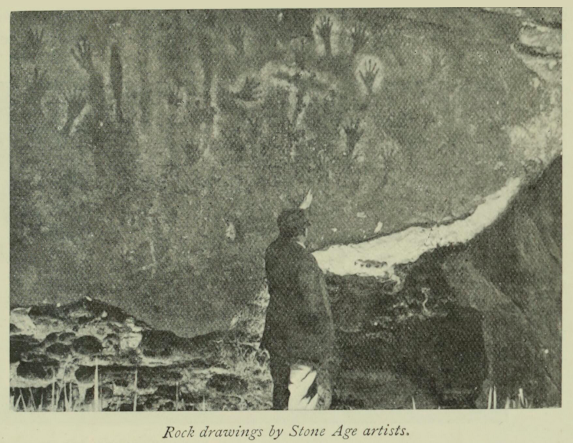
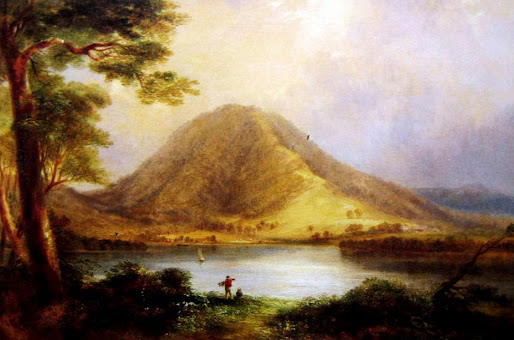
Comments
Post a Comment